Research
 |
Meshorer's Lab Poster. |
|
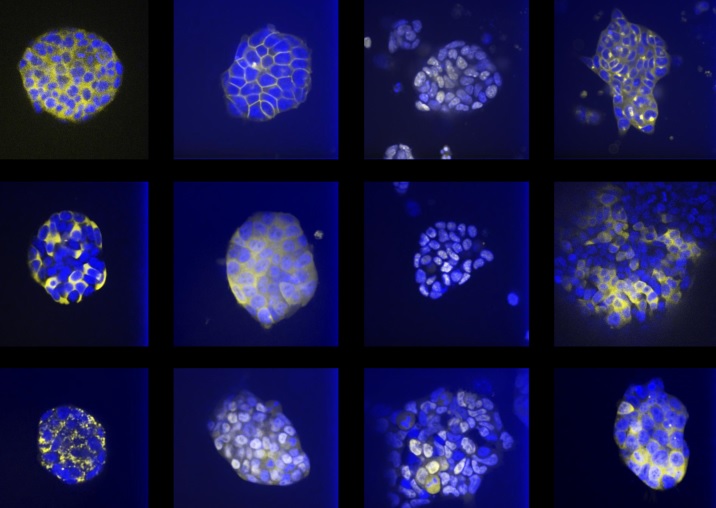
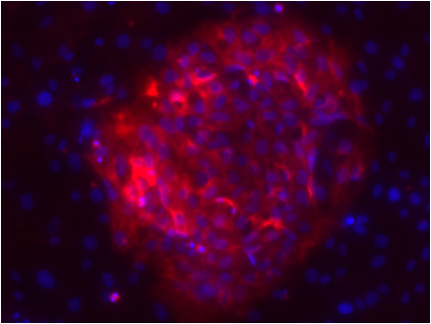
The Meshorer lab is studying nuclear processes in embryonic and neuronal stem cells, including chromatin dynamics and structure, nuclear architecture, transcription and splicing as well as epigenetic processes, in attempt to understand the mechanisms governing self-renewal, pluripotency and differentiation.
Projects
1. Live imaging of nuclear dynamics in stem cell differentiation
2. Chromatin plasticity in embryonic stem (ES) cells and in ES cell differentiation
Using a spinning-disk imaging system equipped with a photobleaching module, we can visualize differentiation events, nuclear body dynamics and protein binding kinetics and exchange in living cells. Using fluorescence recovery after photobleaching (FRAP), fluorescence loss in photobleaching (FLIP) and fluorescence resonance energy transfer (FRET) we are monitoring histones and other chromatin proteins exchange and interactions in living ES cells and during the course of stem cell differentiation.
3. Identification and characterization of stem cell chromatin proteins
Using biochemical assays we are analyzing the differential composition of chromatin proteins in different stages of stem cell differentiation in order to identify stem cell specific chromatin proteins. Once identified, we study their role in stem cell maintenance using a variety of molecular, microscopic and biochemical methods.
4. Stem cell epigenetics (including the development of antibody microarrays)
In this project, we aim to analyze the entire epigenetic landscape in the various stages of stem cell differentiation. In collaboration with Yoav Soen (Weizmann Institute) we began to develop specialized antibody microarrays for all known histone modifications. In the future these antibody arrays will be used for a variety of systems, from analysis of different cell types to screening cancer patients.
5. Reprogramming somatic cells to induced pluripotent (iPS) cells
Here we are using the four ‘Yamanaka’ factors (Oct4, Sox2, Klf4 and c-Myc) to reprogram fibroblasts into iPS cells. We are studying changes in chromatin structure and dynamics during reprogramming and elucidating the roles of different chromatin proteins in dedifferentiation.
6. Alternative splicing patterns in stem cell differentiation.
Here, using whole-genome mouse tiling arrays in collaboration with Thomas Gingeras and Radha Duttagupta (Affymetrix), we are analyzing the splicing and alternative splicing patterns in ES cell differentiation. The same data set is also used to analyze intronic and intergenic transcription as well as gene expression networks during differentiation.
In our ERC project, we aim to understand chromatin plasticity and the function of non-polyadenylated transcription in pluripotency. We are combining biochemistry, single cell advanced imaging assays and high throughput technologies to study chromatin and transcription at a genome-wide scale in ES cells and during differentiation and reprogramming, as well as decipher the function of candidate chromatin proteins and candidate non-polyadenylated transcripts in pluripotency.

Collaborators:
Gil Ast, Tel-Aviv University
Michael Bustin, NCI, NIH
Manuel Garber & Aviv Regev, Broad Institute
Gustavo Mostoslavsky, Boston University
Miguel Ramalho-Santos, UCSF
Karsten Rippe, DKFZ
Paola Scaffidi & Tom Misteli, NCI, NIH
Jens Schwamborn, Muenster
Prim Singh, Charité University, Berlin
Newman Sze, Nanyang Technological University, Singapore
Takumi Takizawa, Gunma University, Japan
Maria-Elena Torres-Padilla, IGBMC